What To Eat While Breastfeeding

By Adeline Woo

New mummies – are you currently breastfeeding?

Because what you eat will eventually be consumed by your baby through your breast milk, it is very important to watch your diet.

Here’s a useful table for watching your diet while breastfeeding.

Breastfeeding Diet
Remember, certain foods like those in the right column can cause indigestion and gas for baby AND mom.

So watch your diet and enjoy a healthy breastfeeding journey!

Source: healthfulmama.com

What To Pack In Your Hospital Bag

By Adeline Woo

Attention preggies in your last trimester!

One important thing to do when getting ready for your baby: Packing the hospital bag, or some call it the labor bag.

Here’s a summary of what to bring and pack for mummy, daddy (or support person) and baby!

Mom Hospital Bag

Mummies, remember to throw in some nursing bras for ease of breast feeding as well!


Dad and Baby Hospital Bag

For the newborn baby, i would recommend bringing your own disposable diapers else you will be stuck with whatever the hospital gives (and charges) you!

Optional Hospital Bag

Some hospitals provide yummy confinement food, but if you’re not bound by the traditional rules of confinement like most Chinese women are, go ahead and indulge in your favorite snacks!  I’ll have to stick to my red date tea and ginger infused dishes…


Source: pinkpistachio.com

Proper Posture During Pregnancy

By Adeline Woo

Being pregnant, especially in the first and last trimester can be a great discomfort for some mummies (like me!).

Sometimes, I just wish I can lie down in bed or slouch in the couch the whole day!

But that’s actually not beneficial for both mummy and baby.  Ergonomics is even more important for us preggies in order to protect our bodies and little kiddo inside.

Here’s a quick and easy info-graphic on how we can maintain proper posture during pregnancy.

Try it now, to LOOK good, and FEEL good!

Proper Pregnancy Posture


Source: Pinterest.com

When do you definitely need to see a doctor for Chicken Pox?

By Adeline Woo

Chicken Pox is most commonly known as a disease for children under the age of 12 years old. However, this does not mean that Chicken Pox in toddlers is not a rare occurrence. For toddlers under a year old, it can be somewhat dangerous as babies aren’t allowed to get the vaccine until they are at least 12 months of age. This means that your toddler is definitely vulnerable to getting the disease and may have some difficulties fighting it off.

Contrary to popular belief, Chicken Pox is not an illness to just leave alone. Babies may not have a strong enough immune system to fight off the disease, thus Chicken Pox in toddlers can result in some complications.

So for the million dollar question, when do you definitely need to see a doctor for Chicken Pox? 

1) When a toddler of 2 months and below catches it.

2)  A mother of newborn baby and the mother breaks out in a rash a few days after birth.

3) You are pregnant and exposed to the Chicken Pox.

4) Your toddler has a weakened immune system or immune disorder


In most cases, there are specific things you can do yourself to help cure this disease naturally with the use of home remedies and natural treatments.  If you just leave it and expect for this to go away on it’s own, you may be doing more harm than good.  It’s of your best interest to get rid of this as quickly as possible.

How far would you go to make your child famous?

By Adeline Woo

As a parent, we want the best for your kids. No matter how much sacrifice it takes, our child still comes first.

I chanced upon this post while online and as a mother, it really puzzles me why parents would put their kids through such pageants.

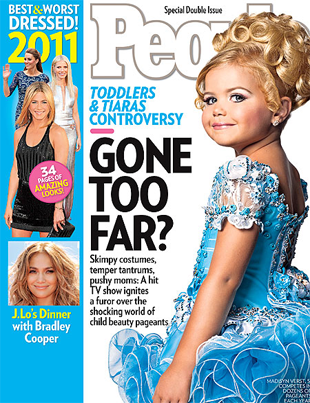
gone too far


According to ExtraTV.com ” The recent controversy centers on show footage of 3 and 4-year-old little girls dressed in suggestive adult costumes. One girl was dressed as Dolly Parton, complete with padded bra, and another as Julia Roberts’ streetwalker from “Pretty Woman.” Many are crying foul that this industry is “sexualizing” young girls.

“Little girls are supposed to play with dolls, not be dolls,” New York-based licensed clinical social worker Mark Sichel told People magazine in its new issue, on newsstands now.

Sichel also said the way parents prepare their children for these beauty competitions (padding, fake hair, fake teeth, spray tans) “causes the children tremendous confusion, wondering why they are not okay without those things.” “

Shouldn’t our role as parents be to keep our child safe, away from the things that would harm them? I’m not entirely sure how dressing them up in skimpy clothing at such a young age would be helpful for them but here’s something to definitely think about.

For the full story: http://www.extratv.com/2011/09/14/toddlers-tiaras-slammed-for-child-exploitation/

Let me know your thoughts and views on this.

Buying The Best Diapers For Your Baby

By Adeline Woo


a sweet baby sleeping on a blanket

1) Get the size right

Before you get to the brands, you need to know which diaper size is best for your child or toddler.  Diapers come in different sizes from 0 to 6, and each brand will offer some features. Here are some key differentiation:

  • Newborn diapers: For babies that still have their umbilical stumps, look for diapers that fold down so the waistband that  the diaper doesn’t irritate the wound.
  • Overnight diapers: These are extra-absorbent diapers that last up to 12 hours at a time, reducing the need for night-time changes.
  • Diapers for sensitive skin: For babies who break out with nappy rash easily, you may need to buy diapers for sensitive skin, such as the Japanese GOO or Mamypoko diapers.
  • Pull-up pants: For older babies, this is the diaper you can use to start potty-training.


2) Spot Diaper problems

In assessing the best diaper brand, you should look out for the following problems:

  • If the diaper leave red marks or heat rash along legs or waist, that means your baby is not comfortable in it.
  • Leaks of urine or poo, there is obviously a lack of leak prevention design.
  • If the diaper needs frequent changing, more than what you deem necessary, then the diaper has some absorbency issue.
  • If you child is constantly having nappy rash, that means your child could be sensitive to the pampers or it doesn’t give room for the pores to breath.

If you experience any of the above, you should try changing to a different brand.


3) Do NOT buy in bulk

Many parents tend to buy things in bulk to save some cash. However, some things are not worth the economies of scale. Newborn babies grow very fast, so don’t buy too many diapers in small sizes. A single pack for size 0 is enough for many babies before they switch to size 1. Size 2 or M size is when you can start buying in bulk for savings.


If you are looking for a unique and practical baby gift for baby showers, full month or first month parties, get a Diaper Cake!

Contact us at contact@diapercakes.com.sg or call us at 65 9766 0661.

Facebook: https://www.facebook.com/DiaperCakesSingapore

Diaper Cakes – Delightfully Different.

Play Ground Safety For First Timers!

By Adeline Woo

Bringing your child to the play ground for the first time sounds a lot easier than it actually is. For all first time parents out there, here are some tips and advice that are extremely useful, we promise!

playground

1) First things first, learn to let go. Let your child explore the play ground on their own. The first time is always the most terrifying experience for the parents. Worried about your child falling down or hurting themselves but giving kids their own space allows them a chance to learn on their own. Letting them run free gives them the confidence and independence they will carry with them as adults.

2) Don’t take your eyes off your child. Put away the iphone, and watch your kid. Many parents just take their kids to the park, plop themselves on the bench and just glue their eyes to their phone. It’s pretty irresponsible and annoying in my opinion to do that. Don’t get me wrong, checking your phone occasionally is fine but focusing more on your phone rather than your child is pure negligence. If your child puts themselves in a dangerous situation you should be there to prevent it. If your child is behaving aggressively to other kids you should be there to intervene. Your child is your responsibility even from a distance.

3) If another kid needs help, help him. Once a toddler was first in line for the slide. Behind him were a set of brothers. The toddler for some reason didn’t want to go down the slide and was holding up the line. The kids behind him seemed to be getting impatient but didn’t do anything. The father of the brothers behind him then said to his sons “Help the baby go down the slide. He might want to ride with you.” The brothers then grabbed on to the toddler and all three of them happily went down the slide together. Now that is something that one parent to another can appreciate.

4) Don’t be overly defensive. Kids can be aggressive by nature. If your child gets pushed by another kid, first make sure he is okay and try to move their attention to a different area of the playground. And as much as you’d like to reprimand the child who pushed your child, it’s not your place. If your child is at fault, admit it to yourself. Check to see if the other child is okay, have your child apologize to the other child, and calmly apologize to the parent. If it was the other way around wouldn’t you appreciate an apology? Kids make mistakes, move on.

5) Remind your child to wait their turn.  There’s nothing worse than being bullied and pushed around after you’ve patiently been waiting your turn. If your child gets too antsy to wait, move their attention to another area of the park and go back when the line has cleared up.

6) Introduce your kids to other kids. When your child is in the same vicinity of another it’s always good to help them break the ice. Encourage your child to say hi, this breaks the ice for the kids so that they can play together. Kids learn by mimicking (it’s a good thing and a bad thing, I know). By introducing your kid to others, he’ll see how they played and learned how to do it himself.

7) Don’t share snacks. The little monster needs fuel to play so make sure to bring a few snacks and some water. As much as sharing is a good lesson, it wouldn’t be the lesson here. Random kids may come to you when they see the snacks in your hands but bear in mind that you have absolutely no idea what the other kids may be allergic to and the last thing you would want is for them to get a bad reaction to the food and have to explain yourself to the other mums or dads.